Doodle Daisy Flower Watercolor Clipart: Vibrant Floral Assets
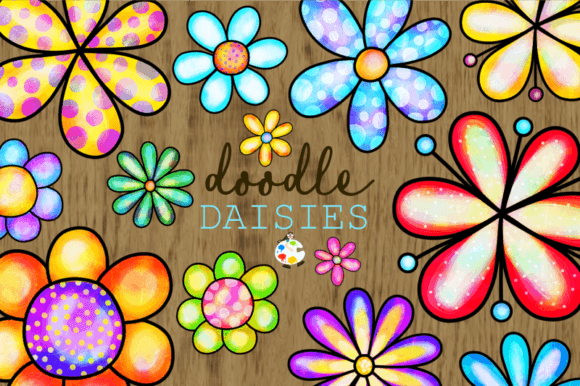
When you need to inject a burst of organic energy into a design, you often have to choose between the rigid perfection of vector graphics and the messy charm of hand-painted textures. The Doodle Daisy Flower Watercolor Clipart collection bridges that gap effectively. This set offers twenty unique daisy illustrations, each colored with a watercolor ink effect that mimics the fluidity of real paint. For designers, these aren't just pretty pictures; they are functional assets intended to solve specific visual problems, particularly when a project needs to feel vibrant, artisanal, or connected to nature.
The Visual Language of Watercolor Ink
Understanding the texture of these assets is key to using them well. Unlike flat, solid-colored vector shapes, these daisies have depth. The "watercolor ink style effect" mentioned in the description is crucial here. It implies a level of transparency and layering. You will likely see pigment concentration at the edges of the petals—common in watercolor painting—fading into lighter washes in the center. This creates a soft, luminous quality that flat colors cannot replicate.
The "doodle" aspect suggests a looseness in the line work. These aren't botanical illustrations meant for scientific journals; they are expressive and slightly imperfect, which is exactly what gives them character. This combination of loose linework and vibrant watercolor washes makes the Doodle Daisy Flower Watercolor Clipart set feel handcrafted. It signals a brand personality that is approachable, creative, and authentic. If you are working on a project that needs to feel "human" rather than corporate, this style is a strong candidate.
Strategic Applications for Modern Brands
For entrepreneurs and brand strategists, visual assets are the building blocks of identity. Here is how to leverage these specific daisies across different mediums:
- Brand Identity & Packaging Design: Small business owners, particularly in the wellness, beauty, or lifestyle sectors, often struggle to find branding that feels premium yet personal. These daisies work exceptionally well for product packaging. Imagine a lavender soap box or a summer jam jar label using these flowers as corner accents. The watercolor texture implies natural ingredients and artisanal quality without you needing to paint anything yourself.
- Digital Marketing & Social Media: Social media feeds can become monotonous if they rely solely on photography or standard stock images. Using the Doodle Daisy Flower Watercolor Clipart as overlays on Instagram stories or as background elements for quote cards can break up the visual noise. Because the PNG files are high resolution (3000+ pixels), they won't pixelate when scaled up for hero images on a website or Facebook banner.
- Editorial & Web Design: Bloggers and content creators can use these individual floral images to create visual hierarchy. For instance, a long-form article about "Spring Gardening Tips" could use a small daisy icon to separate sections or a larger cluster to frame the header. It adds a touch of decoration without overwhelming the typography of the main text.
Technical Considerations for Seamless Integration
From a technical production standpoint, the specifications of this set are designed for professional ease of use. The files are delivered as transparent PNGs at 300dpi. This is the industry standard for print-ready artwork. The transparency is vital; it allows you to place these daisies over textured backgrounds, photographs, or colored paper without dealing with unsightly white boxes or complex masking paths.
When integrating these into your workflow, consider the following:
- Color Harmony: Because the clipart has a "vibrant" color profile, you need to ensure your background palette doesn't clash. Soft neutrals, creams, and muted pastels usually allow watercolor elements to pop. If you place them on a neon background, the "painted" illusion might break.
- Scale and Density: With 20 unique designs, you have variety. Avoid using the same single daisy repeatedly in a pattern, which can look robotic. Instead, rotate, flip, and vary the scale of the flowers to create a wreath or a scattered border that feels natural.
- Layering with Typography: If you are overlaying text on top of these flowers, ensure there is enough contrast. Since watercolors are often translucent, placing dark, bold sans-serif fonts over the lighter washes usually yields the best readability.
Beyond the Asset: Creating Cohesive Design Systems
Purchasing a set of design assets is just the beginning. The real value lies in how you systematize them. The creator of this set also offers digital papers using these same flowers. For a content creator or publisher, this is a significant advantage. It allows for "kit bashing"—mixing and matching elements from the same visual family to create a cohesive look across a newsletter, a lead magnet PDF, and a website.
Consider the psychology of your audience. For adults aged 20–50, particularly in the crafting and small business space, floral motifs evoke specific emotions: growth, renewal, and creativity. By consistently using the Doodle Daisy Flower Watercolor Clipart style across your touchpoints, you build visual recognition. When a follower sees that specific watercolor texture in their feed, they begin to associate it with your content before even reading the text.
Ultimately, these daisies are more than just decoration. They are tools for storytelling. Whether you are a crafter making stickers, a marketer designing a seasonal campaign, or a blogger refreshing your sidebar, using high-quality, textured assets like these signals that you care about the details. It elevates the perceived value of your project, transforming a standard layout into something that feels curated and intentional.